
 All industries
Websites for fintech companies
Fintech companies sell something most buyers can’t see: rules, money and data moving between systems. I design and build sites in Webflow and Framer that make that system easy to follow, and fast enough to feel as solid as the product.

In short
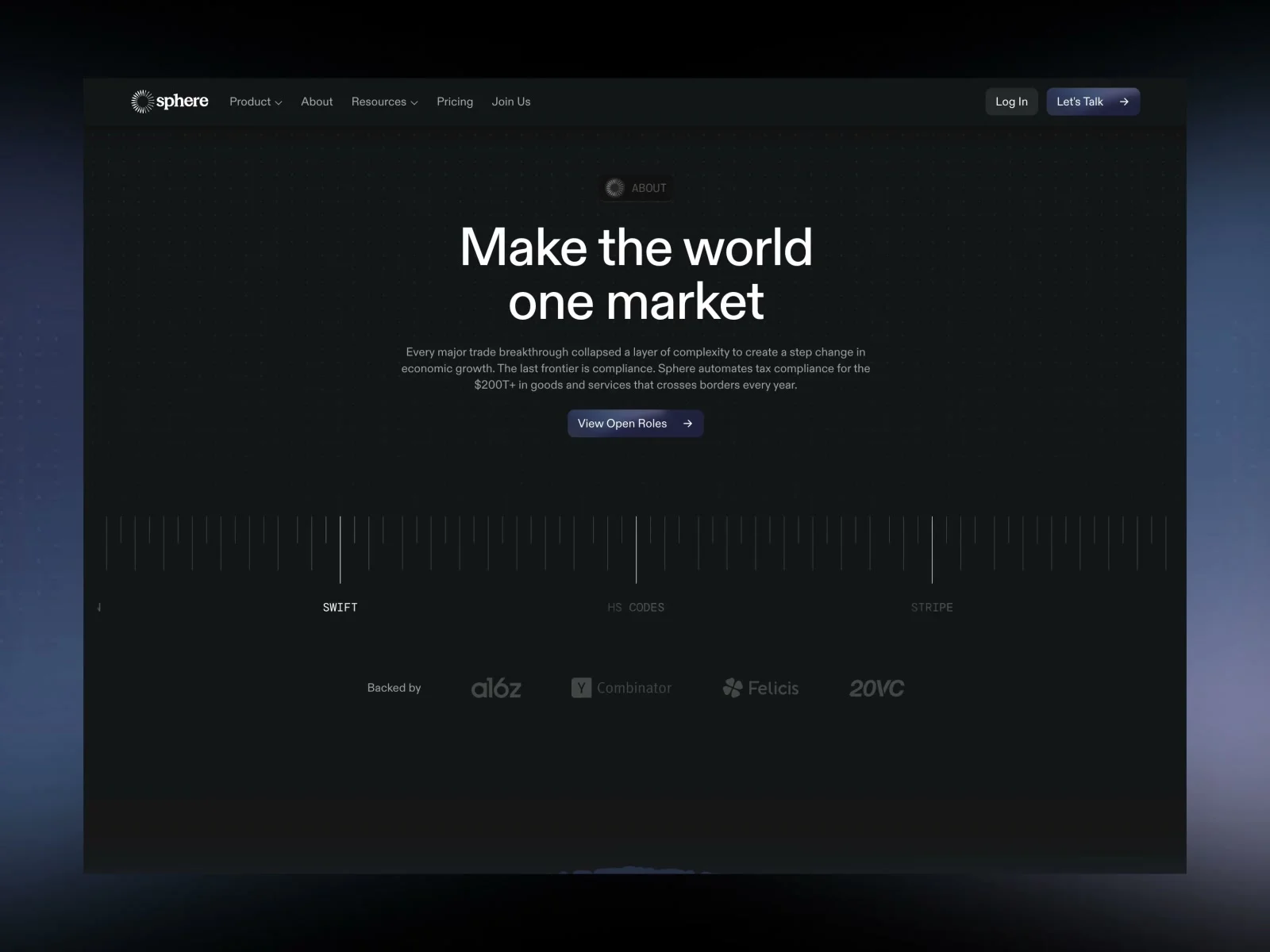
I’m Roman Avshalumov, an Official Framer Expert and Webflow Premium Partner. I design and build websites for fintech companies. For Sphere, which automates tax compliance for goods and services crossing borders, I built an interactive About page in Webflow from Carrara’s design: a horizontal timeline of trade, Lottie animations of Sphere’s system, and a careers section fed live from Ashby.
- Clients
- Sphere
What fintech buyers need to see
A fintech product usually sits on top of something complicated: tax codes, payments, regulation. A buyer has to understand the system well enough to trust it, without reading a manual first.
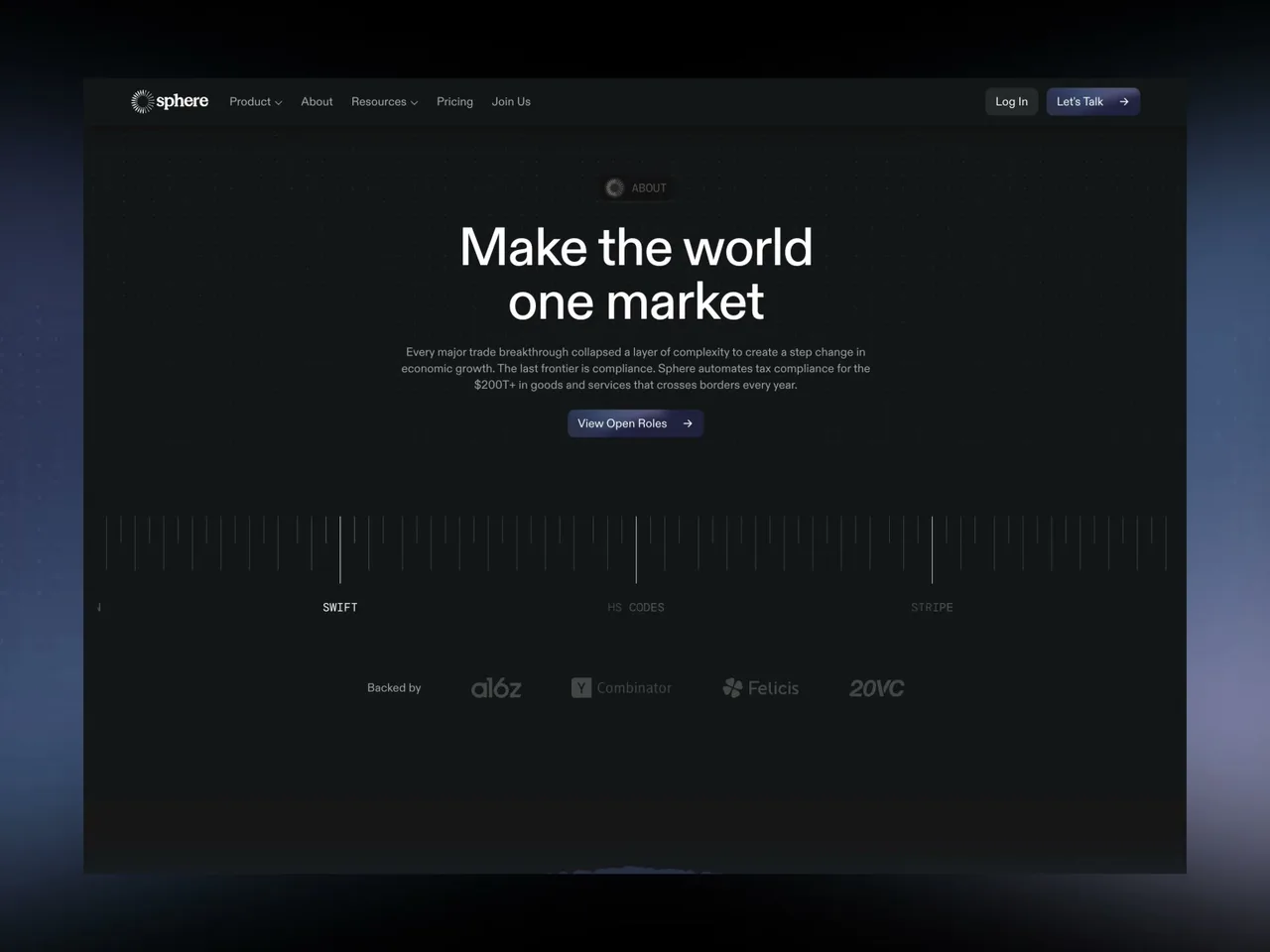
Sphere’s answer was a story. Its About page walks from early sailing routes and 1830s railroads through containerization and SWIFT to Sphere itself, the compliance layer for trade across borders.
What the website has to do
- Make the system visible.Diagrams and animation that show what happens to the money or the data, step by step.
- Tell it as a story.A sequence a buyer can follow beats a wall of features.
- Load fast, even with motion.Rich animation that plays only when it’s on screen, so the page feels as solid as the product.
- Keep it current.Open roles and other changing content fed live from the tools you already use.

How I’ve done it
A history of trade, told along a timeline
At the heart of Sphere’s About page is an interactive horizontal timeline, from early sailing routes to Sphere as the compliance layer for cross-border trade. Carrara designed it; I built it in Webflow.
View case — SphereAnimation that doesn’t cost speed
Sphere’s TRAM system deals with the tax codes of 190+ countries, and Carrara designed intricate node networks and taxonomies to show it. I tied each Lottie animation to the scroll position, so it plays only when it’s needed and the page stays fast.
Live job listings, on brand
Sphere hires through Ashby, and Webflow has no Ashby integration. I built the careers section in Webflow and connected it to live Ashby data with custom code, so it stays on brand and updates itself.

Roman was fantastic. He worked through a complex build like a boss, and push hard to meet deadlines. We’ll work with him again - in fact, we’re kicking off a new project right now!
Services that fit
All services- Figma to Webflow
 What I did for Sphere: Carrara’s design, built in Webflow as designed.From $2,000 · 2–4 weeks
- Webflow developmentWhen you need the design as well as the build.From $4,000 · 3–8 weeks
- Custom codeLive data, job boards, calculators and anything else the platform can’t do on its own.From $1,500 · an hour to a week
Questions
Can a fintech site use rich animation and still be fast?


Yes, if the animation plays only when it’s needed. On Sphere’s page every Lottie animation is tied to the scroll position, so it doesn’t slow down the rest of the page.
Can you build a design our agency made?
Yes. Sphere’s page is Carrara’s design, built by me in Webflow. The design stays theirs; I flag anything that won’t work well in a browser before I build.
Can the site show live data from our other tools?
Yes. Sphere’s careers section pulls open roles live from Ashby. The same approach works for other APIs, CRMs and spreadsheets.
Framer or Webflow for a fintech company?
Sphere is on Webflow. Most of the time I recommend Framer, the easiest for a non-technical team to edit, but I’ll recommend one after looking at your project.